
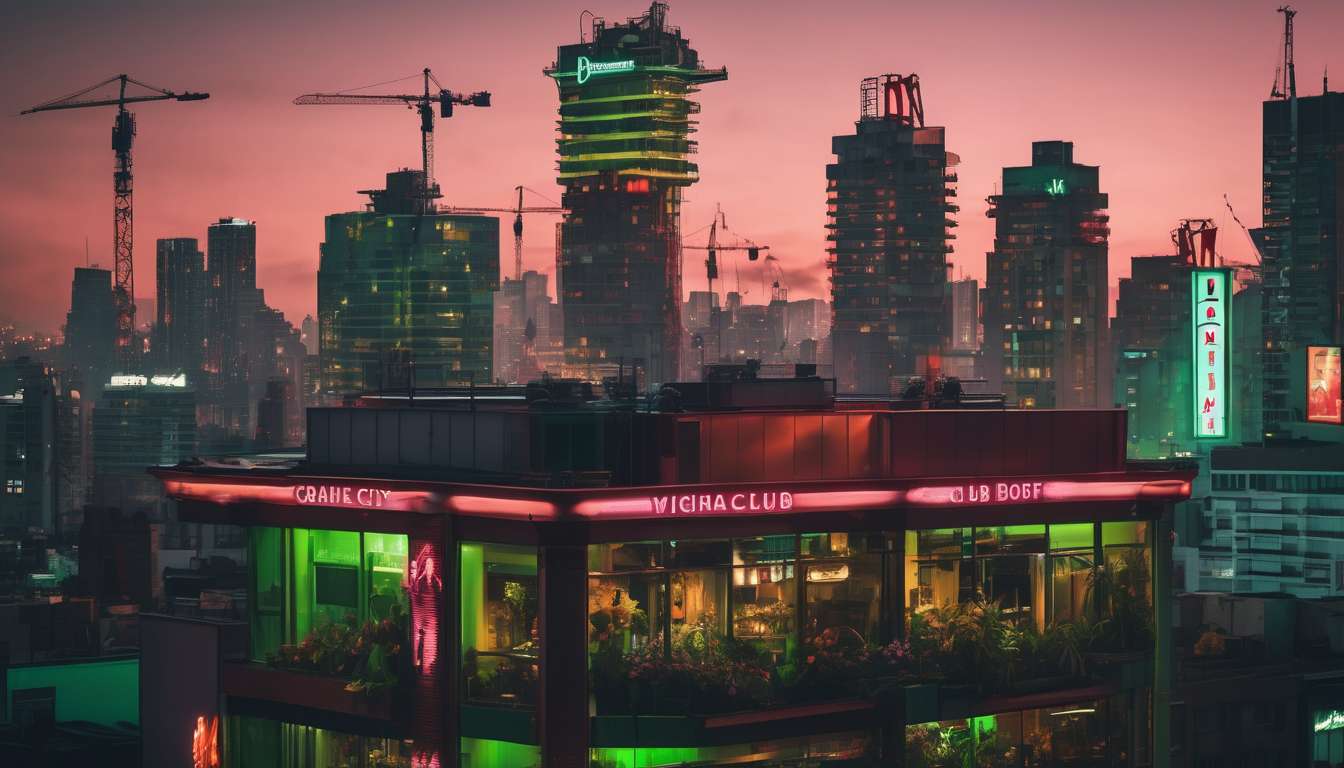
Just as sunrise redraws the skyline, redevelopment redraws the map of our nightlife—one neighborhood thriving while another dims.
We watch familiar neon corridors yield to glass towers and mixed-use complexes, and we reckon with who gains vibrancy and who loses identity.
Standing between preservationists and developers, we track shifting foot traffic, rising rents, and the subtle narrowing of cultural menus.
We map where legacy venues adapt, relocating stages or reimagining menus, and where they close despite loyal followings.
We listen to DJs, bartenders, patrons, and planners, synthesizing anecdotes into patterns that reveal deeper forces:
- zoning changes
- tax incentives
- the allure of perceived safety
We also weigh possibilities: can policy steer redevelopment toward inclusive nightscapes that honor heritage while supporting innovation?
This article traces those contrasts—between old and new, profit and culture, community and commerce—to show how urban change is reshaping nights out and the futures of established nightlife districts.
Historic Venues Under Pressure
We’re watching historic music halls and theaters get squeezed by rising rents, redevelopment plans, and noise-complaint policies.
We feel a shared urgency as nightlife gentrification reshapes familiar blocks, and we want our venues to survive, not just be souvenirs behind glass.
We organize, attend meetings, and document the histories that make these places ours, insisting cultural preservation isn’t nostalgia — it’s community infrastructure.
We recognize that mixed-use redevelopment can offer benefits when it respects legacy.
- Thoughtful designs that integrate performance spaces.
- Robust soundproofing.
- Dedicated cultural corridors that keep stages alive alongside new housing and shops.
We’re clear-eyed about trade-offs and push for concrete protections.
- Zoning protections that preserve live-entertainment uses.
- Community benefits agreements with enforceable cultural provisions.
- Preservation-minded developers who consult performers and patrons.
We want policies that support the people who make nightlife possible.
- Living wages for venue staff.
- Affordable rehearsal and storage spaces for artists.
- Long-term leases so performers and staff can stay rooted.
When we act together, we can negotiate redevelopment that enriches neighborhoods without erasing the venues that shaped our nights, our memories, and our sense of belonging.
Rising Rents and Displacement
Problem: venues are being priced out and communities displaced.
Too many of our favorite venues are getting priced out as rising rents force owners to sell, convert, or close, displacing artists, staff, and the communities that rely on them. We see nightlife gentrification reshape blocks we once knew, turning intimate music rooms and late-night cafes into high-end retail or sterile mixed-use redevelopment projects that don’t reflect local life. We feel the loss not just as patrons but as neighbors: the DJs, bartenders, and performers who built scenes are pushed to the margins.
Goal: protect belonging by prioritizing cultural preservation and affordable tenancy for creative enterprises.
To protect belonging, we advocate for policies and partnerships that prioritize cultural preservation and affordable tenancy for creative enterprises.
Strategies: policy tools and partnerships.
- Support community land trusts that acquire and steward property for long-term cultural use.
- Provide targeted rent relief to independent venues and cultural organizations at risk of displacement.
- Negotiate development agreements that embed cultural space requirements into new projects.
Implementation: work with planners and developers to secure lasting cultural space.
We’ll work with planners and developers to ensure new buildings include:
- Affordable performance spaces.
- Rehearsal rooms and back-of-house support.
- Long-term leases or protections for legacy businesses.
Call to action: collective effort to keep nightlife vibrant and inclusive.
If we act together—advocating, partnering, and negotiating—we can keep our nightlife vibrant and inclusive even as cities evolve.
Zoning and Nighttime Policy
We’ll update zoning and nighttime policies to balance residents’ safety and quiet with venues’ needs for flexible hours, noise allowances, and predictable permitting.
We’ll create clear buffers and decibel standards so neighbors feel respected while clubs and bars can plan with certainty.
We’ll adopt conditional use permits and tailored noise mitigation that reward venues investing in soundproofing, preventing nightlife gentrification from forcing out original operators.
We’ll form neighborhood advisory boards that include longtime residents, artists, and venue owners so decisions reflect shared values and cultural preservation.
We’ll set predictable review timelines and dispute-resolution pathways so community members belong to a fair process, not an adversarial one.
We’ll encourage policy tools that let compatible activities coexist, such as:
- Staggered closing times
- Designated loading zones
- Late-night transport links
We’ll avoid broad bans that shrink cultural life and instead use targeted measures that support coexistence.
We’ll monitor impacts and adjust rules where mixed-use redevelopment pressures threaten diversity.
We’ll ensure zoning supports vibrant nights and inclusive neighborhoods rather than displacement.
Developer-Led Mixed Use
We’ll work with developers to ensure mixed-use projects integrate affordable space for venues, studios, and local businesses rather than displacing them.
We believe developers can be partners, not adversaries, when mixed-use redevelopment includes clear commitments:
- Long-term low-rent leases to provide stability for cultural tenants.
- Shared maintenance agreements so costs and responsibilities are transparent and fair.
- Creative funding for cultural tenants such as rent subsidies, public–private funds, or community land trusts.
We’ll negotiate design standards that protect incubator venues and small makers.
- Acoustic protections (sound insulation, orientation of noisy uses).
- Loading access (dedicated loading zones, timed access).
- Signage allowances that preserve visibility and identity for small businesses and venues.
We’ll set measurable goals to counter nightlife gentrification by reserving space for arts and nightlife uses.
- Reserve a percentage of ground-floor and basement spaces for cultural uses, monitored through community agreements and enforceable covenants.
- Establish measurable targets and regular reporting so progress is tracked and transparent.
We’ll create advisory boards to guide approvals and resolve conflicts.
- Membership to include neighborhood residents, venue operators, and developers.
- Role to advise on project approvals, mediate disputes, and monitor compliance with community agreements.
We’ll champion cultural preservation through documentation and programming.
- Document histories of local venues, artists, and makers.
- Support local programming (grants, technical assistance, marketing).
- Ensure new buildings reflect existing identities through design guidelines and public art.
By centering people who make nightlife meaningful, we’ll build mixed-use redevelopment that keeps our community rooted, welcoming, and economically diverse.
Shifts in Nighttime Footfall
We will track where and when people actually spend evenings.
What we measure:
- Footfall by street, venue type, and hour.
- Peak times, weekday vs. weekend flows, and spillover into surrounding blocks.
- Shifts from legacy bars and clubs toward newly opened cafes, galleries, or residential lobbies created through mixed-use redevelopment.
Why this matters:
- Targeted policies: Data lets us identify streets, venues, and hours seeing growth or decline so we can design interventions that support lively, equitable nighttime activity.
- Cultural preservation: We use precise measurements to propose protections — extended transit hours, targeted grants, flexible licensing — that help small venues and preserve local culture.
- Equity and belonging: We listen to residents and regulars so everyone feels seen; that sense of belonging matters when routes and late-night transit get rerouted or cut.
Our approach to interventions:
- Map footfall patterns to detect crowd movement and venue shifts.
- Combine quantitative data with resident and regular input to understand lived impacts.
- Recommend policy actions (transit, grants, licensing) tailored to protect community rhythms.
Commitment:
We won’t let development erase community rhythms. Instead, we’ll use these insights to keep evenings diverse, accessible, and rooted in the people who make the night come alive.
Cultural Identity and Branding
Define and strengthen the neighborhood’s cultural identity so branding reflects local histories, creative communities, and everyday practices rather than just commercial redevelopment.
We want our streets to tell stories residents recognize, not just sell a lifestyle to newcomers.
By centering cultural preservation in visual identity, event programming, and signage, we resist nightlife gentrification that erases memory and replaces familiar rhythms with generic consumption.
Collaborate with artists, long-standing venue owners, and neighborhood groups to co-create logos, maps, and campaigns that feel like home.
- Include affordable studio spaces, community rooms, and storefront protections in mixed-use redevelopment to ensure residents and creatives remain visible and involved.
- Protect existing venues through leases, community land trusts, or local policy to prevent displacement.
- Establish partnerships between developers and cultural stewards to lock in cultural amenities during planning approvals.
Highlight multilingual narratives, oral histories, and regular low-cost gatherings to signal that belonging matters more than tourist snapshots.
- Produce signage, wayfinding, and printed/digital maps in the neighborhood’s languages.
- Host storytelling nights, oral-history booths, and pop-up performances that document and celebrate everyday practices.
- Schedule recurring, low-cost events (markets, music nights, craft workshops) anchored to community calendars rather than one-off headline attractions.
When identity is rooted in people, not just profit, we keep nights alive with diversity, continuity, and a clear invitation: this is where we belong, together.
- Build trusting, ongoing co-creation processes with residents and cultural workers.
- Embed protections (affordability, tenure, policy) into redevelopment plans.
- Measure success by cultural continuity indicators (venue survival, participation diversity, resident sense of belonging), not only economic metrics.
Adaptive Strategies by Operators
Many venue operators are adapting by diversifying revenue streams, forging community partnerships, and redesigning spaces to balance local needs with financial viability.
We’re shifting from single-purpose venues to hybrid models:
- Cafes that become music rooms.
- Daytime workshops that feed evening performances.These hybrids help withstand pressures from nightlife gentrification and mixed-use redevelopment.
We’re negotiating with developers and local councils to keep affordable leases and insist on cultural preservation clauses:
- Protect signage, programming, and legacy events.
- Secure terms that recognize cultural value, not just commercial rent.
We’re pooling resources with neighboring venues to share costs and expertise:
- Shared marketing, security, and staffing.
- A local network that feels like family and reduces overhead.
We’re programming inclusive lineups and community nights to reaffirm our cultural role:
- Events that prioritize local artists and diverse audiences.
- Sliding-scale pricing and accessible programming so everyone belongs.
We’re documenting histories and training new leaders from the neighborhood:
- Archive local stories and institutional memory.
- Build succession and leadership pathways in the community.
These practical strategies don’t romanticize struggle; they create resilient, connected businesses that can survive redevelopment while honoring the communities that made them essential.
Toward Inclusive Nightscapes
To build truly inclusive nightscapes, we must design policies and practices that center accessibility, safety, and cultural belonging for everyone who uses the night.
We’ll prioritize community-led planning that resists nightlife gentrification by giving local artists, long-standing venues, and neighborhood groups decision-making power.
- Support resident and artist councils with real authority.
- Use participatory budgeting for night-focused projects.
- Require community impact assessments for major nightlife developments.
We’ll support cultural preservation through grants, heritage designations, and programming that keeps local traditions visible and economically viable.
- Provide targeted grants and low-interest loans to legacy venues and cultural practitioners.
- Create heritage designations or cultural corridors to recognize and protect important sites.
- Fund regular programming, festivals, and apprenticeships that transmit local traditions.
We’ll advocate zoning that balances mixed-use redevelopment with protections for affordable creative spaces, ensuring new housing and commerce don’t displace the rhythms that make night districts thrive.
- Implement zoning overlays that reserve space for performance, rehearsal, and small-scale cultural businesses.
- Require inclusionary provisions for affordable creative workspaces in new developments.
- Offer incentives to developers who incorporate long-term leases for cultural tenants.
We’ll create safety strategies that aren’t punitive but restorative and trauma-informed, offering safe transport, well-lit public spaces, and staffed resource hubs.
- Deploy trained, non-police response teams for conflict de-escalation and harm reduction.
- Expand late-night transit, dedicated shuttle routes, and safe-walk programs.
- Improve lighting, wayfinding, and staffed safety hubs with social services and information.
We’ll measure success with inclusive metrics: who feels welcome, who can afford to stay, and whether cultural expression remains vibrant.
- Track resident and attendee surveys on belonging and safety.
- Monitor the economic health of local cultural businesses and affordable housing stability.
- Measure participation in cultural programming across demographic groups.
By centering belonging, accessibility, and equitable economic tools, we’ll shape nightscapes where diverse communities can continue to live, work, celebrate, and evolve together.
How have local residents directly responded to the redevelopment plans and changes in their neighborhood nightlife (e.g., petitions, neighborhood associations, attendance at planning meetings)?
We’ve organized petitions, joined neighborhood associations, and rallied at planning meetings to make our voices heard.
We’ve hosted door‑to‑door outreach, collected signatures, and coordinated social media campaigns to share concerns and ideas.
We’ve testified at city hearings, met with developers, and formed watch groups to monitor licensing and noise.
We’ve also set up community benefit agreements and supported local businesses to preserve our neighborhood’s character and safety.
What specific public funding sources or tax incentives are being offered to developers or venue operators to support redevelopment or preservation efforts?
Which public funding sources or tax incentives are being offered to developers or venue operators to support redevelopment or preservation efforts?
Historic tax credits are being used to offset rehabilitation costs for eligible historic properties.
Low‑interest municipal loans provide affordable capital for renovation and stabilization projects.
Façade improvement grants help cover exterior repairs and aesthetic upgrades to maintain neighborhood character.
Tax increment financing (TIF) captures future increases in property tax revenue to fund current redevelopment projects.
Enterprise zone exemptions offer temporary tax relief to encourage investment in designated areas.
Cultural or arts grants support programming, operational costs, and preservation efforts for venues with artistic or cultural missions.
How we support access to these incentives
- We support applications collectively so smaller venues can qualify for programs that might be administratively or financially out of reach individually.
- We share resources — such as grant writers, legal advice, and template applications — to reduce the burden on individual operators.
- We lobby together to improve program design, increase funding, and ensure incentives are accessible to community-serving venues.
Result
These coordinated strategies help smaller venues access available funding and tax incentives, increasing the likelihood they remain active and preserved within the community.
Are there documented public health or safety impacts (positive or negative) tied to the changes in nightlife patterns, such as noise complaints, crime rates, or emergency-room visits?
Summary of observed evidence
We’re seeing mixed evidence about public health and safety tied to changing nightlife patterns. Some studies report fewer alcohol-related hospital visits where late-night venues close, while other data show emergency-room spikes near late-night hotspots.
Displacement and secondary effects
We find that crime and disorder often shift rather than uniformly decline:
- Nightlife closures can reduce incidents in one area but lead to increases elsewhere when venues or patrons relocate.
- Noise complaints and public disorder can rise in residential areas receiving relocated venues.
Desired approach
We want collaborative solutions that balance cultural vibrancy with safety and health, combining:
- Stronger policing targeted to hotspots and shift times.
- Noise mitigation measures (e.g., soundproofing requirements, venue curfews, and community liaison schemes).
- Accessible health services, such as on-site first aid, late-night clinics, and rapid-response outreach teams.
Key principles for policy design
- Holistic planning: anticipate displacement effects and coordinate across neighborhoods.
- Evidence-led responses: monitor health and crime data continuously to adapt interventions.
- Stakeholder collaboration: involve venue operators, residents, health providers, and police in co-designing solutions.
Next steps you might consider
- Commission a local impact assessment to map hotspots and likely displacement paths.
- Pilot combined interventions (policing + noise mitigation + health services) in one district and evaluate outcomes.
- Establish a stakeholder working group with regular data-sharing and review.
Conclusion
You’ve seen how redevelopment reshapes longtime nightlife districts.
Historic venues are being squeezed by rising rents, zoning shifts, and mixed-use projects that change who shows up after dark.
You can push for policies protecting cultural assets, support adaptive business strategies, and demand inclusive planning that balances development with night-time economies.
If you act — as a resident, operator, or policymaker — you’ll help forge nightscapes that keep heritage alive while welcoming new uses and people.